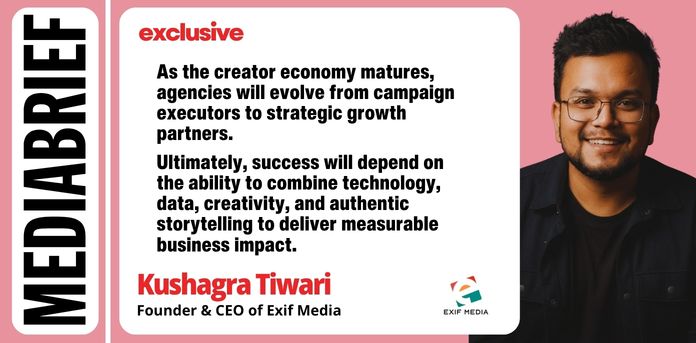































In an exclusive interaction with MediaBrief, Kushagra Tiwari, Founder and Chief Executive Officer, Exif Media, speaks about the evolution of India’s influencer marketing ecosystem, the shift from follower-led campaigns to outcome-driven creator partnerships, and how brands are redefining creator-brand fit. Read on.
Founded with the belief that creator marketing should be driven by relevance and authenticity, Exif Media has evolved alongside India’s growing influencer ecosystem. Speaking about the company’s inception, growth, and current positioning, Tiwari says, “When we started Exif Media in 2021, our belief was simple, creator marketing should be driven by relevance and authenticity rather than follower counts. Since then, we’ve built a specialized influencer marketing platform with a strong network of travel, photography, automotive, adventure, and lifestyle creators across India.”
“Over the years,” Tiwari says, “we’ve delivered more than 2,080 campaigns for over 90 brands across sectors including technology, travel, fintech, automotive, and consumer brands. As the industry has evolved, we’ve also seen brands move beyond vanity metrics to focus on engagement quality, conversions, and measurable business outcomes. There’s also been a clear shift towards long-term creator partnerships and creators with highly engaged niche communities.”
The company has worked with brands including Samsung, OPPO, MakeMyTrip, OYO, Amazon, PhonePe, CRED, and Tata Motors, leveraging technology and AI to build scalable yet authentic creator collaborations.
Speaking about how the company’s approach has evolved over the years, he says, “Our approach has remained consistent throughout this evolution. We focus on matching brands with creators based on relevance, content style, values, and audience alignment, rather than audience size alone. At the same time, we’ve invested in AI-powered infrastructure and transparent campaign processes to make creator collaborations more efficient while preserving the authenticity that brands increasingly value.”
“This evolution,” he says, “has reinforced the approach we’ve believed in from the beginning, helping brands build authentic creator partnerships through meaningful storytelling and measurable outcomes.”

Why brands are prioritising outcomes over follower counts
Today, influencer marketing is shifting from follower-driven discovery to outcome-driven partnerships, with brands increasingly evaluating creators beyond reach and impressions. When asked about the structural changes shaping this transition, Tiwari says, “Influencer marketing is entering a far more results-centric phase. Brands are no longer choosing creators based solely on follower counts—they’re looking at how creators can drive real business outcomes. Today, success is measured through engagement quality, conversions, customer acquisition, brand affinity, and ROI, rather than just reach or impressions.”
One of the biggest shifts he highlights is the growing preference for creators with highly engaged niche communities over those with large but passive audiences. “Authenticity and audience trust have become key factors in creator selection,” adds Tiwari.
He continues, “We’re also seeing brands move away from one-off promotional campaigns to long-term partnerships, where creators act as genuine brand ambassadors and help build consistent storytelling and stronger consumer loyalty over time.”
Highlighting the growing importance of measurement, Tiwari says, “Measurement expectations have evolved significantly as well. Brands now expect detailed campaign analytics, audience insights, performance tracking, and attribution models to better understand the business impact of their influencer marketing efforts. As a result, influencer marketing has evolved from an experimental branding tool into an integrated performance marketing channel.”
“Overall,” he says, “the industry is shifting from a follower-driven ecosystem to a value-driven one, where creators are evaluated not just by their reach, but by their ability to influence consumer behaviour and deliver measurable business results.”
How relevance, trust and audience alignment are shaping creator selection
As brands place greater emphasis on relevance and measurable outcomes, the concept of creator-brand fit has become central to influencer marketing strategies. On how this is being defined and applied in campaign environments, Tiwari says, “Today, creator-brand fit goes well beyond simply matching a brand with a creator who has a large following. It’s about how well a creator’s audience demographics, content style, values, and engagement align with a brand’s target audience and marketing objectives.”
He adds, “Brands are now evaluating a much broader set of parameters before choosing creators. These include audience authenticity, engagement quality, content relevance, past brand collaborations, audience sentiment, and a creator’s ability to influence purchase decisions, not just generate views. Increasingly, first-party data, audience analytics, and platform insights are being used to validate these factors.”
Tiwari also points to a shift from tightly scripted briefs to co-created content. “This allows creators to integrate brand messaging into their content in a way that feels natural while still meeting campaign objectives. We’re also seeing more brands invest in long-term creator partnerships, which help build credibility, consistency, and stronger audience connections over time.”
“Ultimately,” he says, “creator-brand fit is no longer about popularity, it’s about relevance, authenticity, audience trust, and a creator’s ability to deliver meaningful business results.”
Where human creativity retains its edge in an AI-powered ecosystem
With AI increasingly powering content creation, audience targeting, and campaign optimisation, the role of human creativity in influencer marketing is coming under greater scrutiny. Asked where creator authenticity continues to hold a defensible edge, Tiwari says, “AI is making influencer marketing more efficient by streamlining content creation, audience targeting, campaign optimisation, and performance tracking. However, it cannot replace the qualities that make creators influential in the first place, human connection, authenticity, and cultural relevance.”
He adds, “What truly sets creators apart is their ability to build trust through lived experiences, storytelling, and genuine audience relationships. While AI can identify trends, generate ideas, and improve campaign execution, it lacks the intuition to understand cultural nuances and emotional context that determine whether content truly resonates, especially in a diverse market like India.”
“Going forward,” he says, “I believe the most successful campaigns will combine the strengths of AI and human creativity. AI will enhance research, personalisation, and measurement, but creators will continue to play the central role in building trust and delivering authentic stories that drive long-term engagement and business impact.”
What subscription platforms mean for creator growth
As subscription-led and closed platforms gain traction, questions are emerging about their impact on creator discovery and growth. On what this could mean for emerging creators, Tiwari says, “The rise of subscription-led and closed platforms is creating a more fragmented content ecosystem, but I don’t see them replacing open social platforms when it comes to creator discovery. For emerging creators, platforms like YouTube, Instagram, and short-form video apps will continue to be the primary channels for building reach, visibility, and community.”
He adds, “Closed platforms work well for premium content, audience engagement, and diversified monetisation, but they generally favour creators who have already built an audience elsewhere. That’s why I believe most creators will adopt a hybrid approach, using open platforms for discovery and growth, while leveraging subscription-based platforms for exclusive content, community building, and additional revenue streams.”
“Open social ecosystems will continue to drive creator growth, while closed platforms will play a bigger role in audience retention and monetisation rather than discovery,” he says.
Why brands are allocating more budgets to niche communities
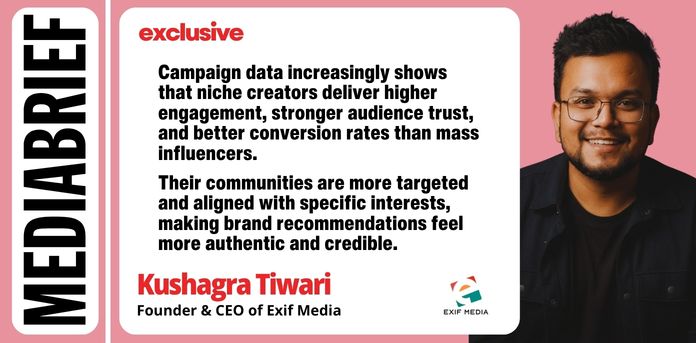
As brands look beyond reach and impressions, niche creator communities are increasingly emerging as high-performance channels for engagement and conversions. On the data and campaign trends driving this shift, Tiwari says, “Campaign data increasingly shows that niche creators deliver higher engagement, stronger audience trust, and better conversion rates than mass influencers. Their communities are more targeted and aligned with specific interests, making brand recommendations feel more authentic and credible.”
“As a result,” he says, “brands are seeing improved ROI, lower customer acquisition costs, and higher purchase intent from these collaborations. This has led to a strategic shift in budget allocation, with marketers investing more in micro and niche creators as part of diversified creator portfolios rather than relying solely on celebrity influencers. The focus has clearly shifted from maximising reach to maximising relevance and measurable business outcomes.”

Can organic discovery still thrive in a pay-to-play landscape?
With creators facing an increasingly crowded digital landscape, questions remain about whether organic discovery can continue to drive meaningful growth. On this shift, Tiwari says, “Platform algorithms and monetisation models are certainly making the creator ecosystem more competitive, but organic discovery remains an important growth driver. While paid promotion can accelerate visibility, long-term success still depends on creating authentic, high-quality content that genuinely resonates with audiences.”
“Today’s algorithms increasingly reward meaningful engagement, watch time, shares, and audience retention. This means creators who consistently deliver value and build genuine communities can still grow organically, even in a competitive landscape.
“Going forward,” he says, “I see the creator economy following a hybrid approach. Paid campaigns will help amplify reach, while organic discovery will remain critical for building trust, credibility, and long-term audience loyalty.”
Building credibility through expertise and thought leadership
In an increasingly crowded influencer marketing landscape, differentiation is becoming as important for agencies as it is for brands. On how Exif Media is approaching its own marketing and communications efforts, Tiwari says, “Our approach to marketing and communications has always been centred on demonstrating expertise rather than self-promotion. We maintain a balanced media mix across our owned channels, including LinkedIn, Instagram, and our website, while also investing in earned media, industry thought leadership, case studies, and strategic brand collaborations.”
“Content sits at the heart of our communication strategy. We regularly share campaign success stories, creator insights, and industry trends to showcase our understanding of the evolving creator economy and build credibility with both brands and creators.
He adds, “At the core of our narrative is the belief that we’re a strategic creator marketing partner, not just an influencer marketplace. Our focus remains on data-driven campaign planning, authentic creator-brand partnerships, and delivering measurable business results through meaningful storytelling.”