
































In an exclusive piece for MediaBrief, Kimmy Babbar, Chief Marketing Officer at JCBL Group, writes about the often-overlooked side of digital transformation in manufacturing — marketing. She explores how legacy brands can shift from traditional sales-led approaches to digital-first strategies that drive growth. Babbar also shares why culture, not tools, is the real barrier to transformation, and how leadership can champion change by showing value, creating internal advocates, and keeping things simple and real. Read on.
When most people talk about digital transformation in manufacturing, they immediately jump to factory automation, smart machines, AI-driven processes, all that good stuff. But there’s another kind of transformation that’s just as critical and often overlooked: how legacy manufacturing businesses market themselves.
Let’s be honest, traditional manufacturing has always leaned more on dealer relationships, trade shows, or sales-led models. Marketing was often more of a support function. A brochure here, a catalog there. Maybe the occasional print ad. That worked for a long time.
But today, everything’s changed. Customers expect to discover, evaluate, and trust a brand digitally, before they ever speak to anyone from the company.

Digital marketing isn’t just an add-on
Adopting digital marketing isn’t about chasing trends. It’s about staying relevant. If you’re in manufacturing and you don’t show up online in a meaningful way, you’re invisible. And visibility isn’t just about having a website. It’s about having the right kind of content, case studies, thought leadership, videos, explainer posts, things that actually help your buyer solve a problem.
Marketing isn’t a cost center anymore. It’s a growth engine. But for legacy setups, the real challenge isn’t tools, it’s culture.
The cultural shift is the real transformation
Digital tools are easy to buy. It’s the mindset shift that takes time. Veteran teams who’ve succeeded for years without digital may wonder: Why change what’s already working? That’s natural. But the market has moved on. Buyers today expect authenticity, speed, and self-education, all of which start with marketing.
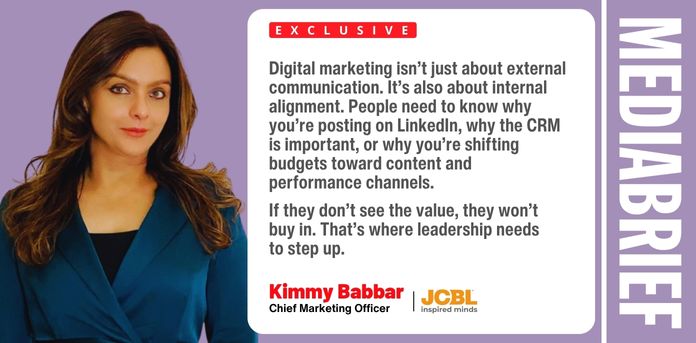
And here’s the thing, digital marketing isn’t just about external communication. It’s also about internal alignment. People need to know why you’re posting on LinkedIn, why the CRM is important, or why you’re shifting budgets toward content and performance channels.
If they don’t see the value, they won’t buy in. That’s where leadership needs to step up — not just to approve the strategy, but to champion it.
Show the value, don’t just talk about it
Buzzwords like “digital transformation” or “customer-centricity” mean nothing without proof. That means showing what’s working. Use real numbers. Share analytics dashboards that highlight leads generated, engagement growth, or improved sales velocity.
Show how a blog post led to an inquiry. Or how a campaign improved product awareness. When people see results, they stop resisting.
Create champions, not just campaigns
One of the fastest ways to drive adoption is to involve more people in the process.
Turn sales reps into brand advocates. Encourage engineers to explain products through simple videos. Get customer support to share real use cases that marketing can repurpose.
Transformation works best when it’s a shared effort, not something that sits with one department.
Keep it real, keep it simple
Most important — don’t overcomplicate it. You don’t need to launch 20 tools at once or overhaul your entire website in a week. Start with simple wins. A refreshed digital presence. Some high-value content. A few email workflows. Build momentum. Then scale.
Digital transformation in marketing isn’t a one-time sprint. It’s a shift in how you think, operate, and connect, both inside the company and out in the market. And in a world that’s changing fast, staying still is the biggest risk of all.