































In a MediaBrief exclusive, Seddharth Merrotra, Head of Business Development and Partnerships at KRAFTON India, speaks about the evolution of gaming into a cultural and marketing platform, the shift towards long-term brand partnerships, and how creators, communities and immersive experiences are shaping the next phase of gaming-led marketing. Read on.
As gaming continues to move beyond its traditional boundaries, the ecosystem is also undergoing a fundamental shift in how audiences engage with content. Speaking about this evolution, driven by the rise of creators, communities, competitive gaming and global entertainment IPs, and the opportunities ahead, Seddharth Merrotra of KRAFTON India says, “India’s gaming story is no longer just about scale- it’s about evolution.”
He continues, “What began as a mobile-first entertainment category has become a powerful cultural ecosystem, driven by creators, competitive gaming, community participation and global entertainment IPs. This shift has fundamentally changed how consumers engage with games and how brands view the medium.
“At KRAFTON, we call this platformization. BGMI today extends far beyond core gameplay, bringing together experiences like Naruto, Spider-Man, Ferrari and India-first innovations such as WOW Maps, where over 50,000 creator-built maps have transformed players into creators. Combined with a community of over 260 million registered users, it reflects a broader industry shift from content consumption to content participation.”
“The next phase of growth,” Merrotra says, “will come from experiences that seamlessly connect gaming with entertainment, creators and brands. The opportunity is no longer to simply reach audiences through games, but to become part of the culture and communities forming around them.”

Why gaming commands Gen Z attention
As gaming becomes an increasingly influential cultural touchpoint for Gen Z and younger millennials, its ability to drive active participation and sustained engagement is setting it apart from traditional digital platforms.
Touching upon what makes gaming uniquely positioned to capture consumer attention and engagement, Merrotra says, “Gaming has become one of the few digital spaces where entertainment isn’t just consumed, it’s experienced. Players don’t simply watch a story unfold; they influence outcomes, collaborate with others and invest emotionally in the journey. That level of participation creates a very different relationship compared to passive media.”
“What’s equally important is gaming’s growing role in pop culture,” says Merrotra. “Collaborations with global franchises like Naruto, Spider-Man and Attack on Titan have blurred the lines between gaming, anime and entertainment, allowing communities to engage with the IPs they love in entirely new ways. These crossovers don’t just introduce new content, they create shared moments that extend across gameplay, creators and social conversations.”
“For brands, that’s a powerful proposition,” says Merrotra. “Instead of interrupting consumers, they have an opportunity to become part of an experience people are already excited about. That’s why gaming is increasingly being viewed as a cultural platform rather than simply another advertising channel.”

From experimental spends to strategic investment
As brands increasingly look beyond one-off activations, gaming is emerging as a more strategic part of long-term consumer engagement. Speaking about the shift in how marketers are approaching gaming budgets and the growing evidence of sustained brand investment, Merrotra says, “Gaming has moved well beyond the experimental stage. The conversations we’re having with brands today are no longer centred around ‘trying gaming’: they’re centred around how gaming fits into long-term consumer engagement strategies.”
Citing an example, he points to the company’s collaboration with Mahindra’s BE 6. Speaking about this, he says, “At first glance, an electric SUV and a battle royale game may seem like an unconventional pairing. But the insight was forward-looking: today’s BGMI players represent tomorrow’s first-time car buyers. Rather than marketing to consumers at the point of purchase, the partnership introduced Mahindra’s born-electric SUV to a digitally native audience through immersive gameplay, exclusive missions, creator collaborations and even the opportunity to win the vehicle itself.”
He adds, “We’re also seeing brands move beyond standalone sponsorships towards integrated campaigns that span gameplay, creators, digital content and on-ground experiences. That shift reflects growing confidence in gaming as a strategic platform capable of building long-term relevance, not just delivering campaign visibility.”
The categories driving gaming’s next growth wave
When asked which categories are currently investing most aggressively in gaming, and where the next wave of advertiser growth could come from, Merrotra says, “Historically, categories like smartphones, consumer technology, FMCG and beverages have been among the earliest adopters of gaming because they naturally align with digitally native audiences. However, we’re now seeing a much broader mix of brands enter the ecosystem as gaming becomes increasingly mainstream.
He adds, “India today has over 555 million gamers, with 66% coming from non-metro markets, making it one of the country’s largest and most diverse digital communities. We’re also seeing engagement deepen, with gaming time growing nearly 30% year-on-year to 13 hours per week, according to Lumikai’s latest consumer research.”

“That scale and engagement are attracting categories that haven’t traditionally associated themselves with gaming. Automotive is one example, as seen through our collaboration with Mahindra and Royal Enfield. What’s changing is that marketers are moving from demographic-led planning to interest-led planning.
Merrotra reiterates, “The question is no longer whether a brand fits gaming; it’s whether gaming audiences fit the brand’s long-term growth strategy.”
What makes a successful gaming partnership
As brands place greater emphasis on building authentic and meaningful connections with consumers, the definition of a successful gaming partnership is also evolving beyond visibility and reach. Speaking about what makes a gaming partnership effective today and how success is being measured, Merrotra says, “The most successful partnerships in gaming today are built around experiences, not exposure. Players are incredibly discerning, they can tell the difference between a brand that’s simply present and one that genuinely enhances gameplay.”
He continues, “Our collaboration with Sting is a good example. Instead of treating the game as advertising inventory, the partnership integrated Sting’s core proposition of energy into gameplay mechanics, making the brand feel like a natural part of the experience rather than an external message. Similarly, collaborations like Ferrari tapped into players’ aspirations by bringing an iconic automotive brand into the world of BGMI in a way that complemented the game’s identity.
“Success has evolved as well,” says Merrotra. “While reach and impressions remain important, brands are increasingly evaluating time spent, participation, repeat engagement, creator conversations, user-generated content and brand recall as stronger indicators of impact.”
The gaming formats delivering brand impact
As brands explore a wider range of opportunities across gaming, from in-game integrations and branded experiences to esports and creator-led collaborations, the focus is increasingly shifting towards formats that can deliver deeper and more meaningful engagement. Speaking about the approaches driving the strongest business and marketing outcomes, Merrotra says, “The strongest outcomes today don’t come from one format, they come from integrated experiences where different touchpoints reinforce each other. The role of creators, esports, gameplay and commerce has become increasingly interconnected.”
Citing an example, he says, “BGMI’s Campus MVP initiative wasn’t designed as a conventional esports property. It combined competition, student leadership, creator engagement and on-ground campus communities, giving brands multiple ways to engage with a highly involved audience over an extended period rather than during a single event.
“Similarly,” he adds, “WOW Maps has opened up opportunities for brands to engage with user-generated content and creator-led experiences, moving beyond publisher-created campaigns to community-driven participation. Meanwhile, partnerships like Sting demonstrated how retail, digital engagement and gameplay can work together as one connected ecosystem rather than isolated activations.
“The format itself is becoming less important than how seamlessly it fits into the consumer journey,” adds Merrotra.

The biggest misconceptions about gaming audiences
As gaming becomes a more established part of the marketing mix, misconceptions around its audiences and role as a marketing platform continue to persist. Addressing some of the key gaps in how marketers view gaming audiences and gaming-led marketing, Merrotra says, “One misconception I still see is that marketers often treat gaming as a campaign channel, when it should be viewed as a consumer behaviour.
He continues, “People don’t log into games looking for advertisements, they come to compete, socialise, express themselves and spend time with communities they identify with. If brands enter that ecosystem with the mindset of buying visibility, they often miss the opportunity. The more effective approach is to start with a player insight and build an experience around it.”
“Another misconception,” he says, “is expecting gaming to deliver only short-term marketing outcomes. In reality, gaming is uniquely positioned to build long-term affinity because players engage repeatedly over months and years. Unlike most media environments, relationships here aren’t built in a single exposure, they’re strengthened through continuous participation.”
He adds, “That’s why the conversation is gradually shifting from Where can we place our brand? to How can we become relevant to this community? The latter creates significantly more value, both for players and for brands.”
Measuring the impact of gaming-led marketing
Speaking about the metrics brands should prioritise when evaluating gaming-led campaigns and partnerships, Merrotra says, “Measurement in gaming is evolving in the same way digital marketing has evolved over the past decade. Impressions and reach remain important, but they don’t tell the full story of consumer engagement.”
He adds, “Gaming provides brands with the ability to measure behaviours that are often difficult to capture elsewhere, how long players interact with an experience, whether they return, whether they complete branded missions, how creators amplify campaigns and how communities continue conversations long after an activation ends. For example, alongside traditional metrics, brands should evaluate time spent, participation rates, repeat engagement, creator-generated content, community sentiment and brand recall.
“Together,” he says, “these provide a much more meaningful view of marketing effectiveness.”
Making gaming a core part of brand strategy in India
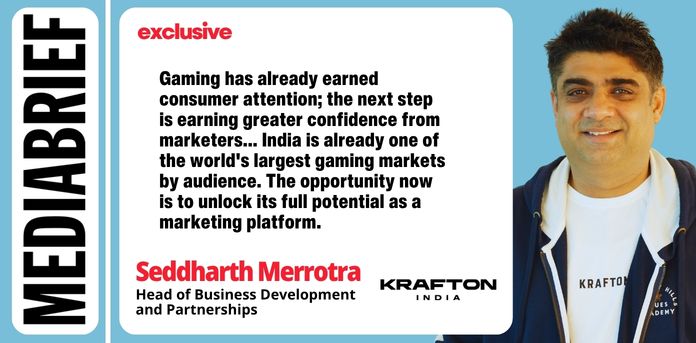
As gaming continues to mature as a marketing platform, the next challenge is to translate its growing consumer relevance into greater confidence and investment from marketers. Speaking about what it will take for gaming to command a larger share of marketing budgets and become a core pillar of brand strategy in India, Merrotra says, “Gaming has already earned consumer attention; the next step is earning greater confidence from marketers.”
“That,” he says, “will require three things. First, continued education around the scale and diversity of gaming audiences. Second, stronger measurement frameworks that help brands benchmark gaming alongside other media channels. And finally, more case studies demonstrating how gaming can deliver business outcomes across different categories- not just gaming-native brands.”
“As the industry matures,” Merrotra says, “I believe we’ll also see greater collaboration between publishers, agencies, creators and advertisers to build solutions that are tailored to specific business objectives rather than standard sponsorship models.
He adds in conclusion, “India is already one of the world’s largest gaming markets by audience. The opportunity now is to unlock its full potential as a marketing platform.”